Buy
Buy Rent
Rent Sell
Sell New
New Prices




How we measure the UK property market
Home tracks live listing supply, asking-price trends, time on market and price trajectories across 124 postcode areas. A plain-English guide to what our data covers and how it works.

Property market data matters most when it is fresh, local and clear about what it measures. There is a gap in what is publicly available, particularly for live supply and speed-of-sale signals, so we built our own. Here is what it covers and how it works.
What we track
Home's house price and market data covers four main signals:
Stock and supply. How many properties are listed for sale or let in a given area at any one time. This is a live count derived from the active listings on our platform, and it is often the earliest signal of a market shift: stock levels tend to move before prices do.
Asking-price trends. How asking prices for listed properties in an area are moving over time, broken down by property type. These are asking prices, not achieved prices, which is an important distinction from Land Registry data.
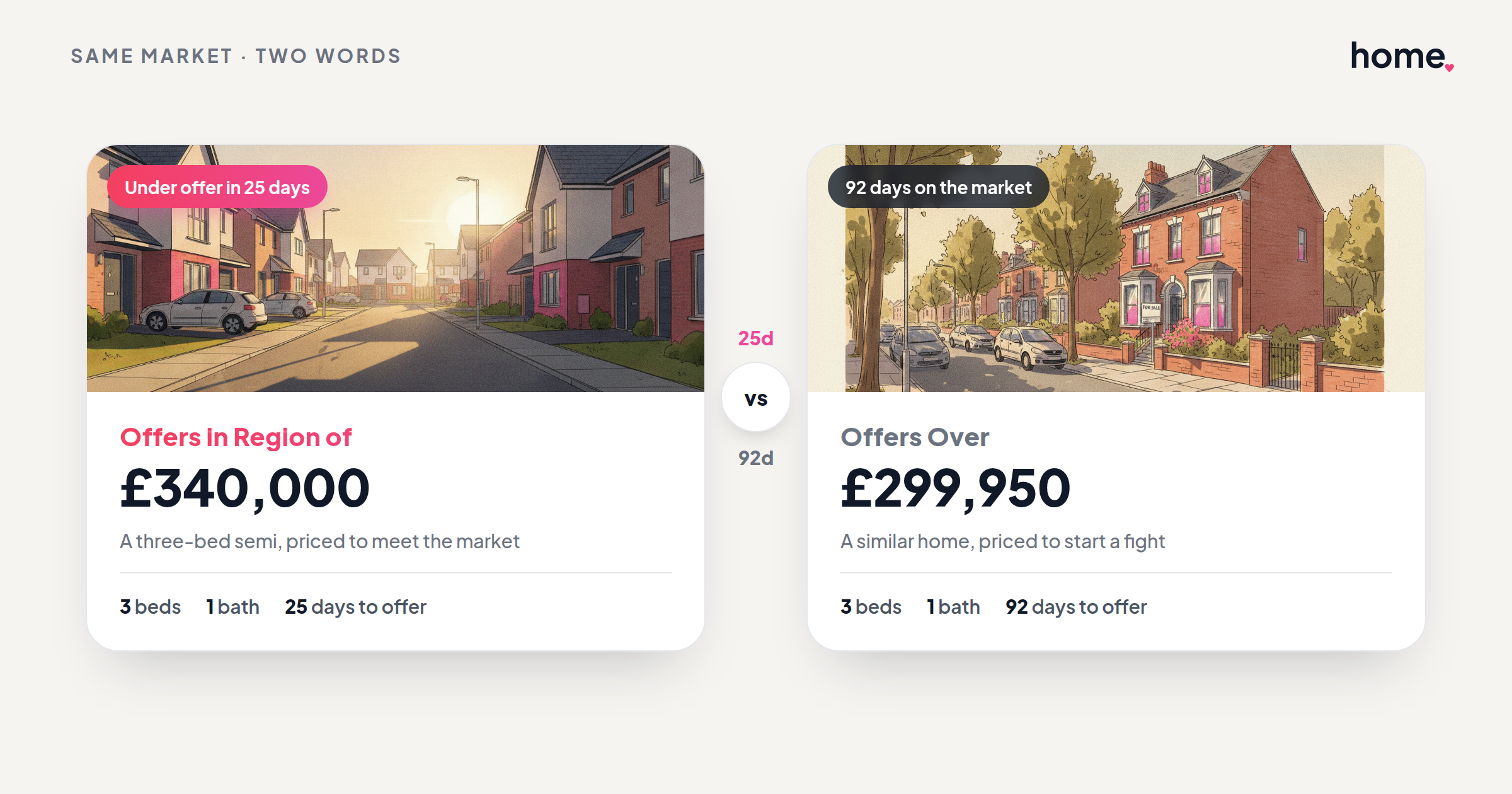
Time on market. The median number of days properties are spending listed before going under offer. Fast sales suggest a competitive market; longer times suggest oversupply or softened demand. We track this by postcode district and county, and we have written separately about what the numbers show for time to sell.
Price trajectory. How asking prices on individual properties change as those listings age. A property that has been reduced twice is at a different point in its selling cycle to one that is freshly listed at the same headline price. A 3-bed house in Fringford, Oxfordshire at its original asking price tells you something different from a 3-bed home in Gravesend, Kent that has just been reduced for the second time. Tracking the trajectory gives a more honest picture of where prices are landing.
What we do not track
We do not have access to final achieved prices unless they are released by Land Registry or another public source. Our figures are listing-based, so they represent the supply side of the market rather than completed transactions.
Our coverage is properties listed on Home. Right now we track 1,249,531 live UK listings, sale and rental combined, of which around 45,623 are new-build. That gives us meaningful depth in most areas, but we are not a census of every property that trades hands.
How often it updates
Our stock and supply figures update continuously as listings go live or come off the market. Asking-price trends, time-on-market and price-trajectory figures update monthly, compiled from the preceding period's listing data.
Where to find it
All of this is available free on our house prices pages. Select a county, postcode area or specific location and the data panel shows you the full picture for that area. If you want the postcode-level detail behind the headline numbers, we have also broken down UK housing supply by region.
If you are a journalist or researcher and want to work with this data directly, get in touch.
All figures are derived from Home's live listings data and should be read as directional market signals. They are not audited financial or transactional data. Land Registry data remains the authoritative source for achieved UK house prices.
Further reading: the ONS UK House Price Index.
Thinking about your next move?
See what your home's worth in seconds, with the UK's longest-running property data behind it.
Get an instant valuation